
When it comes to food safety in India, the authority that sets the rules, enforces the standards, and regulates every part of the food chain is the FSSAI.
But what exactly is the FSSAI organisation? What is its purpose, power, and impact on food businesses and consumers?
This blog gives you a complete breakdown of the Food Safety and Standards Authority of India (FSSAI)—what it does, how it works, and why it’s one of the most important regulators in the country.
What Is FSSAI?
FSSAI stands for the Food Safety and Standards Authority of India.
It is the central food regulatory body created under the Food Safety and Standards Act, 2006.
FSSAI is responsible for:
- Formulating food safety standards
- Regulating and monitoring food manufacturing and sales
- Granting food licenses
- Conducting food inspections
- Preventing food adulteration and contamination
When Was FSSAI Formed?
- Established: August 5, 2008
- Under the Ministry of Health and Family Welfare
- Formed to consolidate multiple food laws under one umbrella
Before FSSAI, food regulations in India were scattered under various acts like the Prevention of Food Adulteration Act, the Fruit Products Order, and the Meat Food Products Order.
Headquarters and Structure
- Head Office: New Delhi, India
- Chairperson: Appointed by the Central Government
- CEO: Administrative head of day-to-day operations
- Regional Offices: Located in cities like Mumbai, Kolkata, Chennai, and Guwahati
- State Food Authorities: Handle local enforcement, licensing, and inspections
Key Functions of FSSAI
1. Framing Food Safety Regulations
FSSAI sets the rules and standards for:
- Food ingredients
- Food additives and colours
- Processing and packaging norms
- Labelling, branding, and expiry rules
- Permitted chemical usage
- Organic and fortified food standards
2. Issuing FSSAI Licenses and Registrations
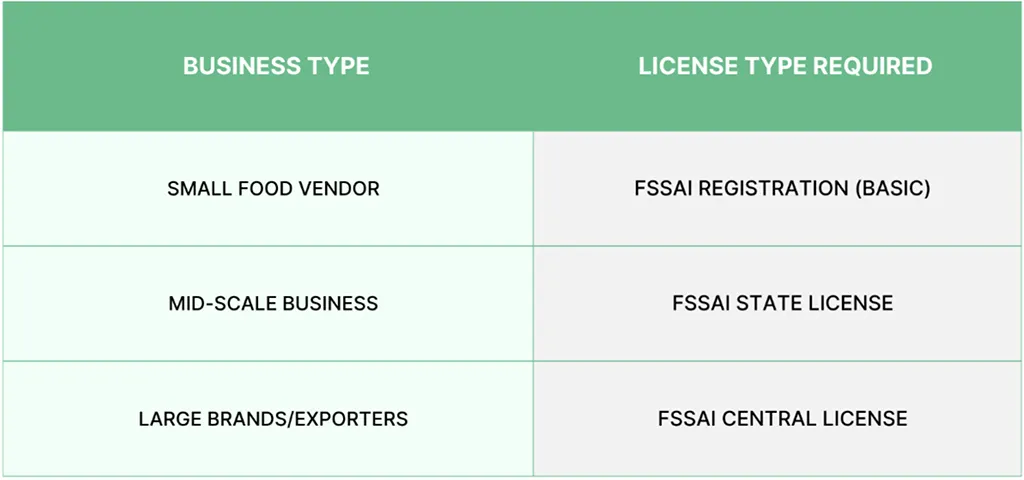
Every food business in India must register with FSSAI or obtain a license, based on turnover and business scale.
3. Monitoring and Inspections
FSSAI works with:
- Food Safety Officers (FSOs)
- Designated Officers (DOs)
- Analysts and Lab Officials
To ensure:
- Hygiene and cleanliness
- Packaging and labelling compliance
- Sampling and product testing
- Action against defaulters
4. Consumer Awareness and Education
FSSAI runs national awareness campaigns like:
- Eat Right India
- The Orange Book (for food service establishments)
- Clean Street Food Initiative
- BHOG (Blissful Hygienic Offering to God) for temple prasad hygiene
5. Developing Food Testing Infrastructure
FSSAI accredits:
- Public and private food testing laboratories
- NABL-approved testing facilities
- Rapid testing mobile labs (FoSTaC Vans)
6. Digital Food Licensing Systems
FSSAI developed digital portals like:
- FoSCoS (Food Safety Compliance System) – for license applications
- FoSTaC – for food safety training
- FLRS – older license/registration system
- INFOLNET – national food laboratory network
Legal Power of FSSAI
The FSSAI has authority to:
- Penalize non-compliant food businesses
- Recall unsafe food products
- Seal and suspend food businesses
- Issue corrective orders and legal notices
- Ban harmful ingredients or additives
Violations under FSSAI laws can result in:
- Penalties up to ₹10 lakh
- Cancellation of business license
- Criminal prosecution in serious cases
FSSAI and Food Business Operators (FBOs)
If you are a Food Business Operator (FBO), FSSAI is your primary regulator.
Every FBO must:
- Obtain FSSAI registration/license
- Follow packaging, labelling, and safety norms
- Cooperate during inspections
- Renew licenses on time
- Print the 14-digit FSSAI number on all food items
(Need help navigating FSSAI rules and licensing? We simplify it for you. Talk to an expert →)
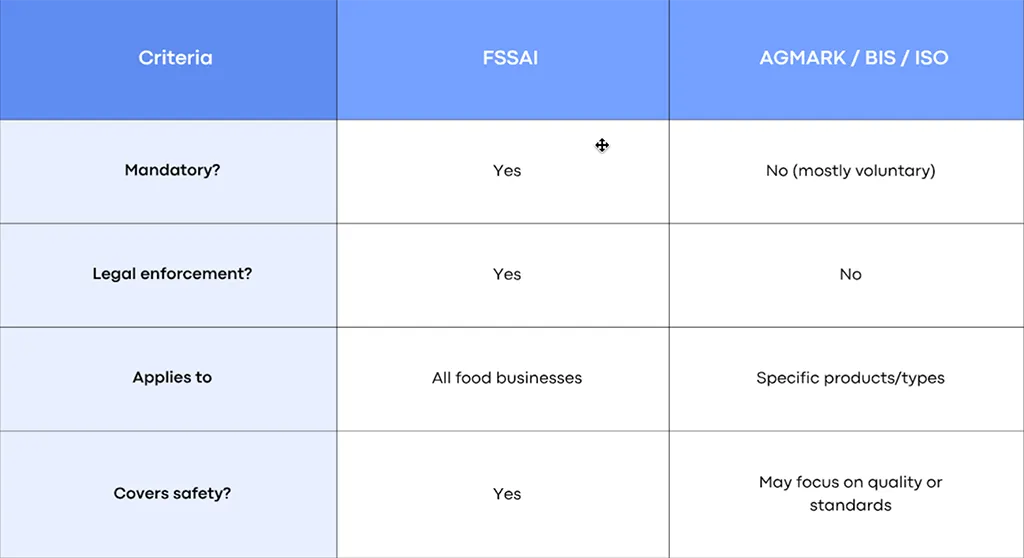
Difference Between FSSAI and Other Food Certifications
Why FSSAI Matters for Every Business
- Builds customer trust
- Ensures legal compliance
- Prevents foodborne illness outbreaks
- Enables market access (offline & online)
- Required for tenders and vendor contracts
- Mandatory for export approvals and FDA certification
Conclusion
The FSSAI is the backbone of food safety regulation in India. Whether you’re a home cook, multinational brand, or online seller, FSSAI ensures the food you serve or sell is safe, standardized, and legally authorized.
Understanding and complying with FSSAI isn’t just a legal requirement—it’s good business.
(Want full support with your FSSAI license or compliance? We’ll handle it end-to-end. Apply now →)
FAQs
What does FSSAI stand for?
Food Safety and Standards Authority of India.
Is FSSAI a government body?
Yes, under the Ministry of Health and Family Welfare.
Who needs to register with FSSAI?
Any person or business involved in the food chain.
Where is FSSAI headquartered?
New Delhi, India.
What’s the role of FSSAI in food safety?
It regulates food safety laws, licensing, and standards.
Can FSSAI shut down a business?
Yes, in case of non-compliance or safety violations.
Is FSSAI certification the same as AGMARK?
No. AGMARK is for agricultural products, FSSAI is broader.
How do I apply for an FSSAI license?
Does FSSAI regulate restaurants?
Yes. All restaurants must have an FSSAI license.
How long is the FSSAI license valid?
1 to 5 years, depending on the plan selected.